Young African women, lured by promises of education, travel, and well-paying jobs in Europe, say they were instead deceived into working at a Russian drone factory producing weapons used in the Ukraine war.

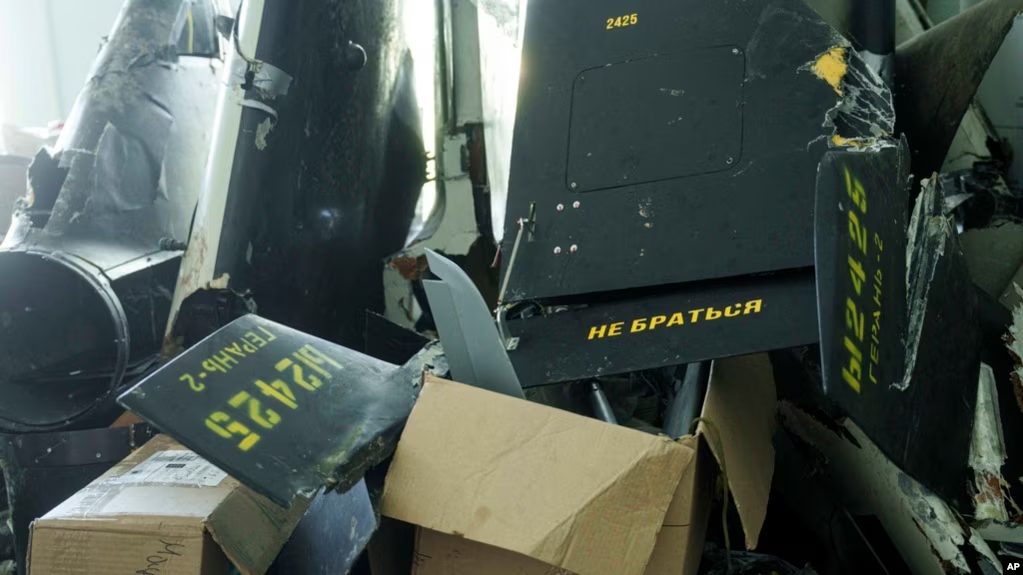
An Associated Press investigation revealed that women aged 18 to 22 from Kenya, Uganda, Nigeria, Rwanda, South Sudan, Sierra Leone, and even Sri Lanka were recruited through a program called “Alabuga Start.” Advertised as a work-study opportunity in hospitality and catering, the reality turned out to be long hours building Iranian-designed Shahed attack drones at a military plant in Russia’s Tatarstan region.
“I don’t really know how to make drones,” said one African woman who had abandoned a job at home for the opportunity. “The company is all about making drones. Nothing else. I regret and I curse the day I started making all those things.”
The plant is located in Alabuga Special Economic Zone, now Russia’s largest hub for drone production. Documents reviewed by AP show that the goal is to build 6,000 drones annually by 2025, with 4,500 already completed.
Women interviewed by AP described:
-
Long 12-hour shifts with irregular rest days
-
Deducted wages for accommodation, flights, and Russian language classes
-
Exposure to caustic chemicals causing skin damage
-
Constant surveillance in dormitories and workplaces
Despite promises of $700 monthly pay, many received far less after deductions. One woman said she was left with so little that she struggled to pay for public transport.
“We are maltreated like donkeys,” she said, adding that banking sanctions made it hard to send money home.
The program reportedly also recruited from Ugandan orphanages, and continues to expand into Asia and Latin America.
The Russian Foreign Ministry, Tatarstan’s governor, and Alabuga SEZ officials did not respond to AP’s requests for comment.
The drone complex was itself attacked by Ukrainian forces in April, injuring at least 12. Despite the risks, some women remain at the factory, hoping to send even a small amount back to their families.